

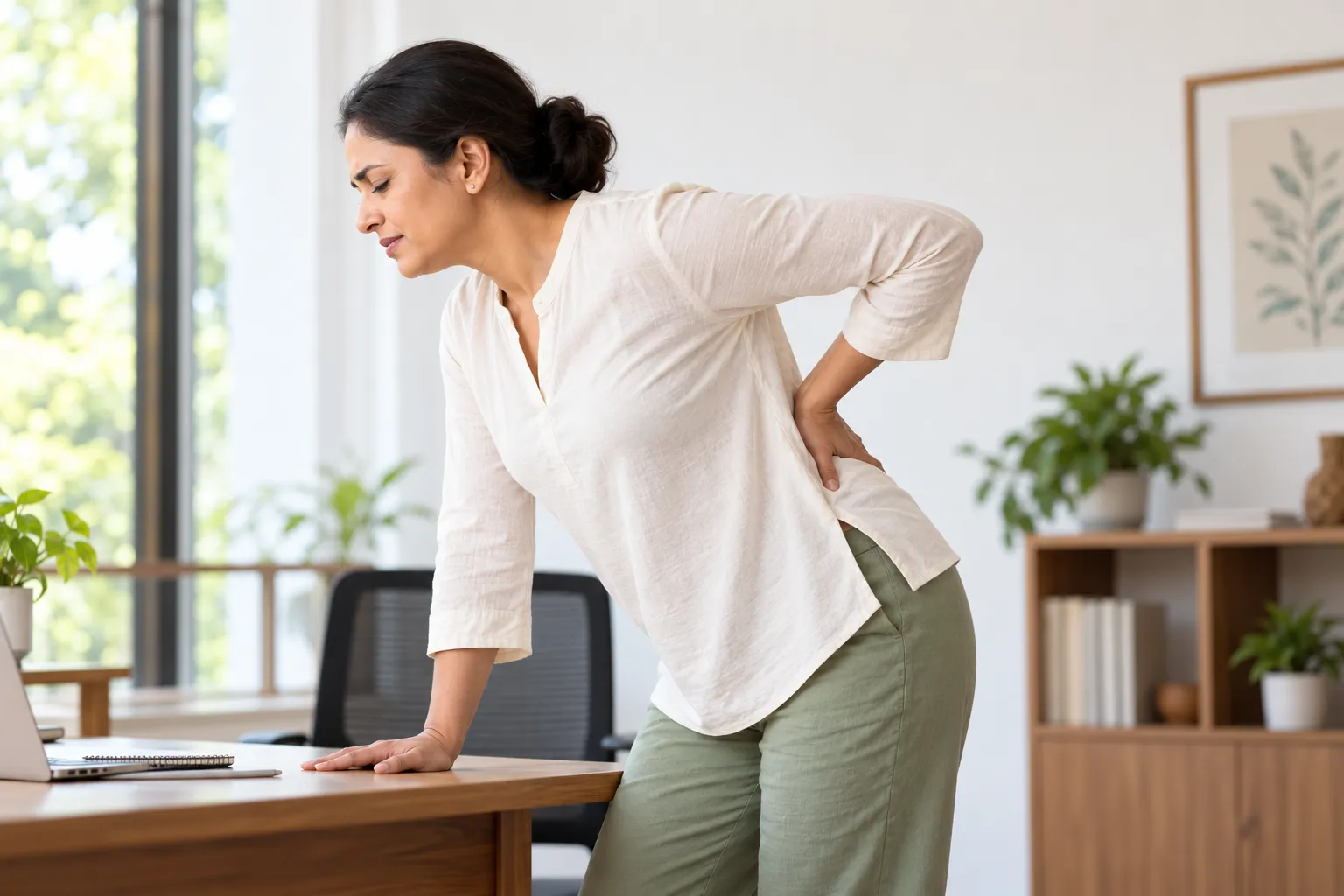
For long-standing, non-specific low back pain, yoga can be a sensible, low-cost movement option. Research suggests that yoga can help improve pain and function by a small amount compared with no exercise, while its benefits appear broadly similar to other back-focused exercises.
Other approaches used in naturopathy, including hydrotherapy, massage and acupuncture, may provide comfort or support for some people. However, none should be presented as a universal cure or as a replacement for appropriate medical assessment.
The more useful question is not simply "Does naturopathy work for back pain?"
It is:
What type of back pain do you have, what does the evidence support, and which approaches may be appropriate for you?
Key Takeaways
Non-specific back pain does not have one identifiable serious underlying cause.
Yoga may provide a small improvement in pain and function.
Yoga has not been shown to be clearly better than other appropriate back exercises.
Some people can experience a pain flare when beginning yoga.
Certain warning signs require medical assessment before starting a therapy programme.
Hydrotherapy, massage and acupuncture may provide supportive care, but evidence differs between treatments.
A naturopathy programme should be adapted to the individual's condition.
Prescribed medicines should not be stopped or changed without advice from the treating doctor.
What Is Non-Specific Back Pain?
Back pain can have many different causes.
This article mainly discusses chronic non-specific low back pain in adults, generally referring to pain that continues for three months or longer without a specific serious cause being identified.
It does not cover every type of back pain.
For example, a different medical approach may be required when pain is associated with:
A recent significant injury or fracture
Infection
Progressive nerve compression
Pregnancy
Certain internal medical conditions
This distinction matters because a treatment that may be appropriate for non-specific back pain is not automatically appropriate for every cause of back pain.
If you already have a diagnosis, your treatment should be adapted accordingly.
When Should You See a Doctor First?
Most back pain does not indicate an emergency, but some symptoms should not be managed by simply starting yoga, massage or naturopathy.
Seek medical attention if back pain occurs with:
Numbness around the groin or inner thighs
New difficulty controlling your bladder or bowel
Worsening weakness in a leg
Fever
Unexplained weight loss
Significant or persistent night pain
Pain following a significant injury
Long-term steroid use
Severe or unusual pain, particularly when it begins later in life
These symptoms can require further investigation.
A therapy programme should never delay necessary medical care.
What Does Research Say About Yoga for Back Pain?
Yoga is one of the better-studied movement approaches for chronic low back pain.
A 2022 Cochrane review covering 21 trials and more than 2,200 participants found that yoga produced a small improvement in pain and back-related function compared with no exercise.
However, the difference in pain was smaller than what would usually be considered a clinically important improvement.
The review also found little or no important difference between yoga and other back-focused exercises.
This means yoga should not necessarily be viewed as superior to physiotherapy, strengthening or other appropriate exercise.
It can instead be considered one reasonable movement option among several.
Some people may also experience increased pain or a flare after beginning yoga.
That does not mean yoga is inherently unsafe. It means the intensity, movements and progression should be appropriate for the individual.
You can learn more about Janani's approach through its Yoga Therapy programme.
How Does Exercise Fit Into Back Pain Management?
Exercise is an important part of managing many cases of persistent back pain.
Depending on the individual, useful movement may include:
Walking
Trunk strengthening
Hip and leg strengthening
Spine and hip mobility
Gradual increases in physical activity
Exercises that reduce fear of movement
Yoga can include several of these elements.
Physiotherapy can also provide individualized exercise progression.
The goal is not to find one "perfect" exercise. It is to find appropriate movement that can be performed safely and consistently.
Can Hydrotherapy Help Back Pain?
Hydrotherapy is commonly used in naturopathy settings for comfort, relaxation and easier movement.
It can involve approaches such as:
Warm-water applications
Cool-water applications
Baths
Immersion
Other water-based applications
However, good-quality evidence specifically establishing hydrotherapy as a treatment for the underlying cause of chronic back pain is limited.
It is therefore more appropriate to describe hydrotherapy as supportive care rather than a treatment that fixes the cause of back pain.
Janani provides Hydrotherapy as one of its treatment approaches.
What About Acupuncture?
Acupuncture is another non-drug approach that may be considered for some people with chronic low back pain.
Clinical guidance has included acupuncture among non-pharmacological approaches for chronic low back pain, although the strength of evidence varies.
As with other therapies, individual response can differ.
At Janani, Acupuncture is available as part of the broader treatment offering.
It should be considered as one component of a broader management plan rather than a guaranteed solution.
What About Massage and Mud Therapy?
Massage may help with relaxation and can temporarily reduce muscle tightness or discomfort for some people.
Mud therapy is used in naturopathy settings for local warmth and comfort.
However, these approaches should not be described as reversing spinal changes or curing every type of back pain.
You can explore Janani's current Mud Therapy treatment to understand how it fits within the centre's naturopathy approach.
How Janani Approaches Back Pain
At Janani, the process begins with consultation.
The individual's history, symptoms and available medical reports can be reviewed before deciding how the programme should be structured.
The purpose is to understand whether the person's presentation is appropriate for a naturopathy-based programme and whether further medical or specialist assessment is required.
For suitable individuals, the programme may incorporate:
Yoga and meditation
Hydrotherapy
Massage
Mud therapy
Acupuncture
Acupressure
Diet and lifestyle guidance
The combination can be adjusted according to the individual's needs and progress.
Janani also provides Diet and Nutrition Therapy as part of its wider treatment offering.
Should You Stop Your Pain Medication?
No.
If you are already taking prescribed medication, do not stop, reduce or change it simply because you are starting yoga or naturopathy.
Any medication change should be discussed with the doctor who prescribed it.
Naturopathy and yoga can be considered alongside appropriate medical care when suitable.
Who Should Modify Yoga Practices?
Certain health conditions may require specific modifications.
For example:
People with disc problems and nerve symptoms may need to avoid or modify deep forward bends and twists until medically assessed.
People with osteoporosis may need to avoid certain loaded spinal movements.
Pregnancy requires an appropriately modified programme.
People recovering from spinal surgery should follow their surgeon's recommendations.
People with uncontrolled high blood pressure may need to avoid certain inverted or strenuous practices.
People with severe hip or knee arthritis may require modified postures.
Always tell the yoga therapist about existing diagnoses, surgeries and relevant medical reports.
How Long Does It Take to Improve?
Back pain usually should not be approached with the expectation of dramatic improvement after one or two sessions.
Studies commonly examine changes over several weeks or months.
Some people may notice improvements in movement, confidence, sleep or daily function before seeing a large change in pain intensity.
If pain is getting worse, new symptoms develop or there is no meaningful improvement, reassessment is appropriate.
Frequently Asked Questions
Can yoga cure a slipped disc?
Yoga does not reverse disc changes. Some disc-related pain can improve, but symptoms involving nerve compression require appropriate medical assessment.
Is yoga safe for back pain?
It can be appropriate when adapted to the individual's condition. However, some people experience pain flares, so exercises should be progressed gradually.
Can I stop my painkillers if I start naturopathy?
No. Prescribed medication should only be changed under appropriate medical advice.
Do I need an MRI?
Not necessarily. Many cases of non-specific back pain do not require imaging. A healthcare professional can determine whether imaging is appropriate based on your symptoms and examination.
Can hydrotherapy cure back pain?
Hydrotherapy may provide comfort and support movement, but it should not be presented as a guaranteed cure.
How often should I practise yoga?
The appropriate frequency depends on your condition and programme. Regular, manageable practice is generally more practical than occasional intensive sessions.
Conclusion
Yoga and naturopathy can form part of a broader approach to managing chronic back pain.
The evidence supports realistic expectations: yoga may provide modest benefits, while other therapies such as hydrotherapy, massage and acupuncture may provide supportive care for selected individuals.
The most important step is to understand the type of back pain you have, identify warning signs and choose an appropriately adapted programme.
To explore Janani's residential options, visit the Naturopathy Programmes page.