
Mud therapy, also studied in clinical literature as peloid or fango therapy, uses natural clay matured with mineral water, applied as a warm or cool pack to the skin. Systematic reviews on mud-pack therapy for knee osteoarthritis report measurable improvement in pain and function, and there is documented evidence for anti-inflammatory and skin-soothing effects. It also has clear contraindications, including active skin infections, open wounds, uncontrolled high blood pressure, and certain inflammatory conditions, which is why it is applied under supervision rather than self-administered.
How Mud Therapy Works
Mud used therapeutically (called peloid or fango) is a mixture of clay, organic matter and mineral water, matured over weeks so the clay absorbs minerals from the water. When applied to the skin, usually warmed, it works through a few distinct mechanisms:
Heat retention, which increases local circulation and helps relax muscles, similar in principle to hydrotherapy
Absorption properties, where the clay's fine particle structure can draw moisture and some surface substances from the skin
Mineral content, which may support skin condition, though the degree to which minerals are absorbed through the skin is still debated in the research
Cooling and anti-inflammatory effect, when applied cool rather than warm, which can reduce local temperature and calm acute inflammation
This dual nature, the same clay pack can be prepared warm for muscle relaxation or cool for inflammation, is why mud therapy is used across a fairly wide range of conditions rather than one narrow application.
What the Research Actually Shows
The strongest clinical evidence for mud therapy is in joint conditions, particularly knee osteoarthritis. A systematic review examining studies published between 2002 and 2017 on spa therapy, mud-pack therapy, balneotherapy and mud-bath therapy for knee osteoarthritis found supportive evidence for improvements in pain, function and quality of life. A separate randomized, double-blind, non-inferiority trial on mud-pack therapy for knee osteoarthritis found significant improvement in pain and function scores from baseline through 12 weeks of follow-up, with no significant safety concerns reported in the study population.
For skin applications, mud and clay packs have documented anti-inflammatory and pain-relieving effects, and are traditionally used for conditions including mild dermatitis, minor skin irritation and general skin dryness. A review on mud therapy and the skin microbiome found that therapeutic muds affect the microorganisms living on skin in varying ways, though the review noted the number of quality studies in this specific area remains limited. Overall, the skin-specific evidence base is less developed than the joint-pain evidence base, so claims about mud therapy for specific dermatological conditions like psoriasis should be treated as traditional use supported by mechanism, not as strongly proven by large clinical trials.
Benefits of Mud Therapy
Joint pain and stiffness. The best-supported use, particularly for knee osteoarthritis, where mud-pack therapy has shown measurable improvement in pain and function in controlled studies.
Muscle relaxation. Heat retention in warmed mud packs supports circulation and eases muscle tension, similar to other heat-based naturopathic therapies.
Skin soothing. Traditional and mechanism-based support for mild skin irritation and dryness, with a more limited but growing evidence base.
Reduced local inflammation. When applied cool, mud packs can calm acute inflammation in a manner comparable to a cold compress, with the added mineral and adsorption properties of the clay.
Who Should Be Cautious or Avoid Mud Therapy
This is the part often left out of mud therapy content, and it matters. Mud therapy is generally not recommended, or needs specific medical clearance, if you have:
An active skin infection, open wound, or weeping sore
Uncontrolled high blood pressure or significant cardiovascular disease (heat-based applications increase circulatory demand)
Active inflammatory rheumatic disease in an acute flare
A recent injury, surgery, or joint replacement in the treatment area
Fever or active systemic infection
Pregnancy, without prior medical clearance
This is why mud therapy at Janani is applied only after a doctor's assessment, not as a walk-in treatment available to everyone regardless of condition.
What Naturopathy Does Not Claim
Mud therapy is not a treatment for internal disease, does not detoxify the body in the sense some marketing implies, and its skin-specific benefits are better supported by mechanism and traditional use than by large clinical trials, unlike its joint-pain applications, which have clearer trial evidence. Any provider claiming mud therapy cures serious skin disease or internal illness should be treated with skepticism.
What to Expect During a Mud Therapy Session
Assessment. A doctor confirms mud therapy is appropriate for your condition and rules out contraindications.
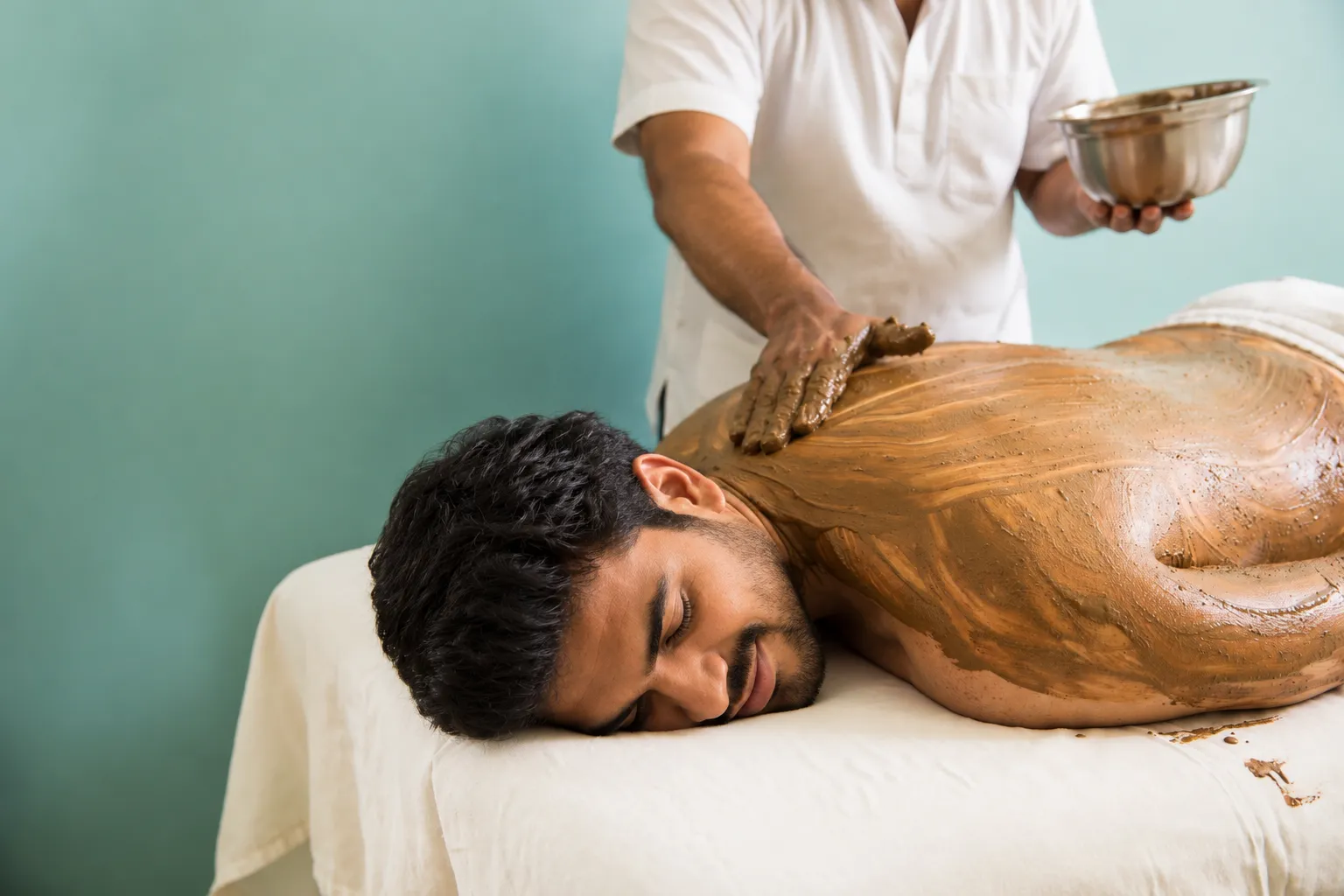
Application. Mud is applied to the relevant area, warm for muscle and joint conditions, cool for acute inflammation, and left for a set period.
Duration. Sessions typically run a defined number of minutes, followed by removal and rinsing.
Integration. Mud therapy is commonly combined with hydrotherapy or therapeutic yoga as part of a broader program rather than used alone.
Follow-up. Response is monitored across your program and the plan adjusted if needed.
Can mud therapy help with psoriasis or eczema?
Is mud therapy safe for everyone?
How is mud therapy different from a regular clay face mask?
If you are dealing with joint pain, stiffness or mild skin irritation and want to know whether mud therapy fits your specific case, the right first step is a consultation, since contraindications need to be ruled out before treatment.