

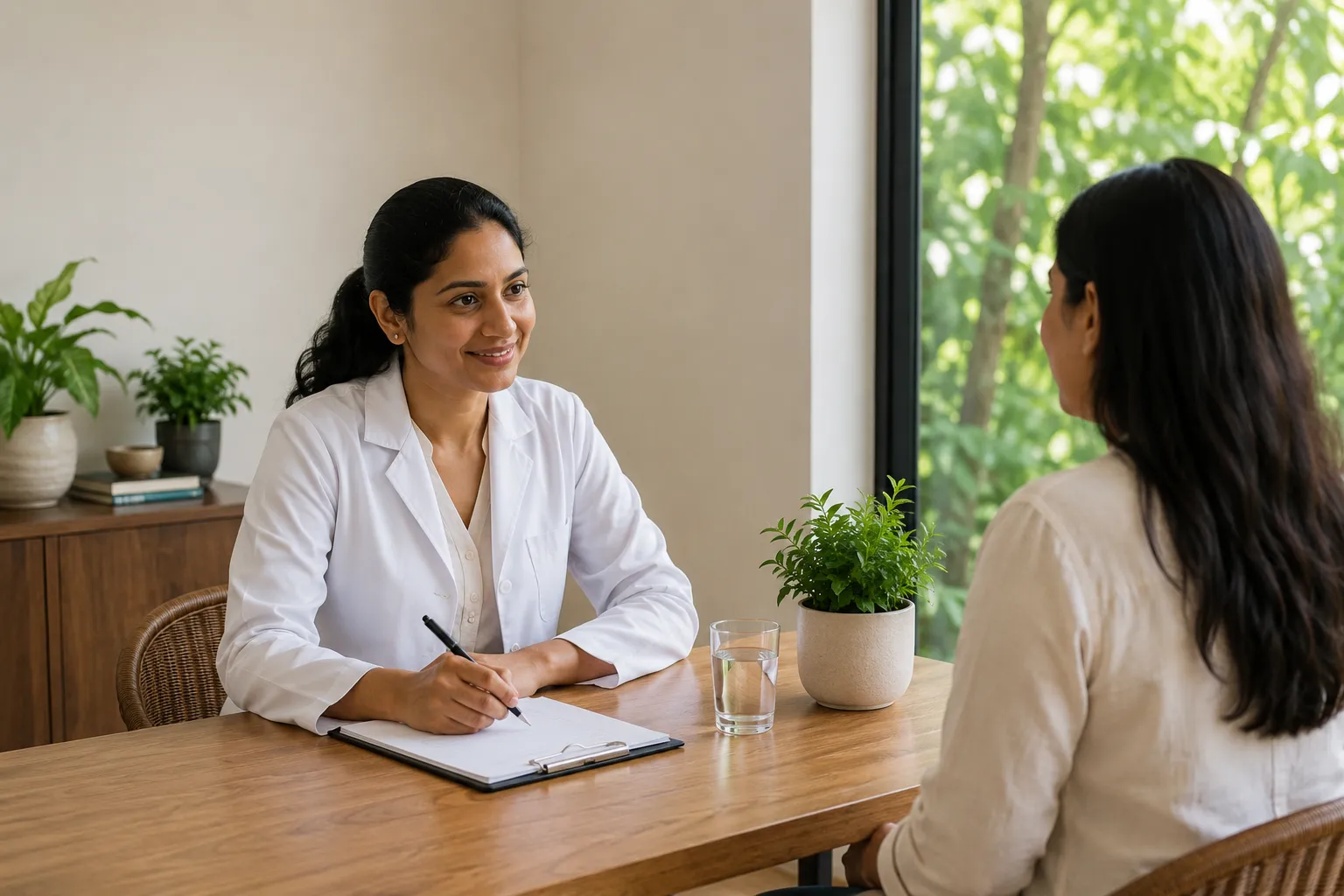
A lot of hesitation around trying naturopathy has nothing to do with the treatments themselves. It comes from not knowing what the first visit actually looks like, what questions get asked, how long it takes, and what decision gets made at the end of it. This post walks through it plainly.
A first naturopathy consultation typically involves a detailed review of your medical history and current medication, a discussion of your specific concerns and goals, a physical assessment relevant to your condition, and a recommendation for whether naturopathy is appropriate for you, and if so, what kind of program fits. It is not a sales conversation, and a properly run consultation will tell you honestly if naturopathy is not the right fit for your case, or if it should run alongside, not instead of, your existing medical care.
Why the Consultation Comes Before Any Treatment Plan
Every program at Janani starts with a doctor consultation rather than a fixed treatment package assigned based on a condition name alone. This matters because two people with the same diagnosis, say, type 2 diabetes, can have very different medication regimens, complication histories and daily circumstances. What is appropriate for one may not be appropriate for the other. The consultation exists to figure out which is which, before any therapy is scheduled.
Step by Step: What Actually Happens
1. Medical history review
You will be asked about your current diagnosis (if any), how long you have had it, what medications you are taking, any past surgeries or hospitalizations, and any other conditions you manage. This is not a formality. It directly determines what therapies are appropriate and which are contraindicated for you specifically.
2. Discussion of your concerns and goals
This is where you explain, in your own words, what brought you in. Chronic pain that hasn't responded to other treatment, a lifestyle condition you want more control over, general stress and fatigue, whatever it is. A good consultation listens to this before proposing anything, rather than fitting your case into a standard package.
3. Physical assessment
Depending on your concern, this may include basic vitals (blood pressure, weight), a review of mobility or pain points, or relevant markers tied to your condition (such as blood sugar, for a diabetes case). This gives the doctor a current baseline, not just your history on paper.
4. An honest suitability conversation
This is the step that separates a responsible consultation from a sales pitch. The doctor should tell you plainly whether naturopathy is appropriate for your case, whether it should run alongside your existing medical care (which is standard for most chronic conditions), and whether any red-flag symptoms mean you need a different kind of medical attention first. If naturopathy is not the right fit, or not the right fit yet, that should be said directly.
5. Program recommendation
If naturopathy is appropriate, the doctor will recommend a program length, generally 3, 7, 14 or 21 days, based on your specific case, not a default assumption. A 3-day assessment-focused stay suits a different situation than a 21-day program built around sustained habit change, and the reasoning behind the recommendation should be explained to you, not just stated.
6. Questions
This is your opportunity to ask anything: what a typical day looks like, what's included, how your medication will be handled during your stay, what results are realistic for your specific case, and anything else that affects your decision.
What a Good Consultation Should Never Do
Promise a specific outcome (cure, reversal, guaranteed result) without qualification
Recommend a program length or intensity before reviewing your actual medical history
Tell you to stop existing medication without coordinating with your prescribing doctor
Push a package before understanding your specific case
Avoid answering direct questions about risks, contraindications, or what is not well supported by evidence
If any of these happen, it's reasonable to ask more questions or seek a second opinion before proceeding.
How Long Does It Take?
A thorough first consultation generally takes longer than a typical short medical appointment, since it covers history, goals, physical assessment and program planning in one sitting, rather than being split across multiple short visits. Exact duration varies by individual case complexity.
What to Bring
Any existing medical records, recent test results, or prescriptions
A list of current medications and dosages
Any prior diagnosis documentation relevant to your concern
A clear sense of your main concern and what you're hoping to address (even a rough idea is enough to start the conversation)
What Happens After the Consultation
If a program is recommended and you decide to proceed, your daily schedule, diet plan and therapy combination are set based on what was discussed. If in-patient, you begin your stay on the agreed schedule. If out-patient, follow-up visits are scheduled based on your plan. Either way, the plan set at your consultation is not fixed in stone. It is reviewed and adjusted as your program progresses and your doctor observes how you are actually responding.
Will I need to stop my current medication?
Do I need a referral or prior diagnosis to book a consultation?
How soon can I expect to see results?
Can naturopathy help prevent future health problems?
If you've been considering naturopathy but weren't sure what the first step actually involves, now you know. The consultation is where your specific case gets assessed, honestly, before anything else is decided.